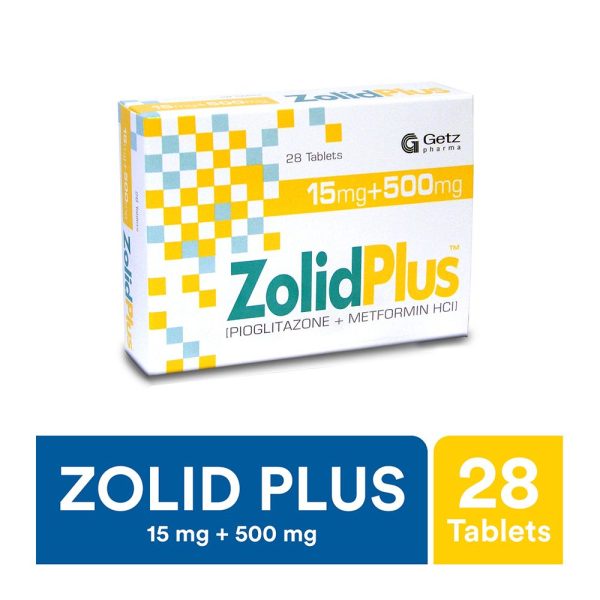
Requires Prescription (YES/NO)
Yes
Generics
Metformin HCl, Pioglitazone HCl
How it works
Pioglitazone: Pioglitazone decreases insulin resistance in the periphery and in the liver resulting in increased insulin-dependent glucose disposal and decreased hepatic glucose output. Unlike sulfonylureas, pioglitazone is not an insulin secretagogue. Pioglitazone is a potent and highly selective agonist for peroxisome proliferator-activated receptor-gamma (PPAR?). It improves glycemic control by improving insulin sensitivity at key sites of insulin resistance namely adipose tissues, skeletal muscles and liver. Insulin resistance is known to play a major role in the pathogenesis of type 2 diabetes. Metformin HCl: Metformin HCI is an anti-hyperglycemic agent which improves glucose tolerance in patients with type 2 diabetes, lowering both basal and postprandial plasma glucose. It does not stimulate insulin secretion and therefore does not produce hypoglycemia.
Usage And Safety
Dosage
Starting dose for patients inadequately controlled on Metformin monotherapy: Based on the usual starting dose of Pioglitazone (15-30 mg daily), It may be initiated at either the 15 mg/500 mg or 15 mg/850 mg tablet strength once or twice daily, and gradually titrated after assessing adequacy of therapeutic response. Starting dose for patients who initially responded to Pioglitazone monotherapy and require additional glycemic control: Based on the usual starting doses of Metformin (500 mg twice daily or 850 mg daily), It may be initiated at either the 15 mg/500 mg twice daily or 15 mg/850 mg tablet strength once daily, and gradually titrated after assessing adequacy of therapeutic response. Starting dose for patients switching from combination therapy of Pioglitazone plus Metformin as separate tablets: It may be initiated with either the 15 mg/500 mg or 15 mg /850 mg tablet strengths based on the dose of Pioglitazone and Metformin already being taken or as directed by your physician.
Side Effects
Combination therapy: Common: Anemia, visual disturbance, weight increased, arthralgia, headache, hematuria and erectile dysfunction. Uncommon: Flatulence.Individual active substances of the fixed dose combination: Pioglitazone: Common: Upper respiratory tract infection and hypoesthesia. Uncommon: Sinusitis and insomnia.Metformin HCl: Most common: Taste disturbance, nausea, vomiting, diarrhea, abdominal pain and loss of appetite. Uncommon: Decrease in Vitamin B12 absorption and serum levels and lactic acidosis.
Drug Interactions
Pioglitazone: An enzyme inhibitor of CYP2C8 (such as gemfibrozil and an enzyme inducer of CYP2C8 (such as rifampin) , Oral Contraceptives. Metformin HCI: Cationic drugs (e.g. , amiloride, digoxin, morphine, procainamide, quinidine, quinine, ranitidine, triamterene, trimethoprim and vancomycin , Furosemide , Nifedipine , diuretics, corticosteroids, phenothiazines, thyroid products, estrogens, oral contraceptives, phenytonin, nicotinic acid, sympathomimetics, calcium channel blocking drugs and isoniazid.
Indication
Pioglitazone + Metformin HCI is indicated as an adjunct to diet and exercise to improve glycemic control in patients with type 2 diabetes mellitus who are already treated with pioglitazone alone or who are not adequately controlled on metformin alone, or for those patients who have initially responded to pioglitazone alone and require additional glycemic control.
When not to Use
Pioglitazone + Metformin HCI is contraindicated in patients with:- Hypersensitivity to pioglitazone, metformin HCI or any component of the product.- Cardiac failure or history of cardiac failure (NYHA Class III or IV).- Hepatic impairment or evidence of active liver disease.- Acute or chronic disease which may cause tissue hypoxia such as cardiac or respiratory failure, recent myocardial infarction, shock.- Acute alcohol intoxication, alcoholism.- Renal failure or renal dysfunction (creatinine clearance <60mL/min), which may also result from conditions such as cardiovascular collapse (shock), acute myocardial infarction and septicemia.- Current bladder cancer or a history of bladder cancer.- Uninvestigated macroscopic haematuria.- Diabetic ketoacidosis or diabetic pre-coma.
Warnings
Warning 1
Pioglitazone, like other thiazolidinediones, can cause fluid retention when used alone or in combination with other anti-diabetic agents, including insulin. Fluid retention may lead to or exacerbate heart failure. If these signs and symptoms develop, the heart failure should be managed according to current standards of care.
Warning 2
Therapy with pioglitazone, like other thiazolidinediones, may result in ovulation in some premenopausal anovulatory women. Thus, adequate contraception in premenopausal women should be recommended while taking Pioglitazone + Metformin HCI.
Warning 3
Patients receiving pioglitazone in combination with insulin or oral hypoglycemic agents may be at risk for hypoglycemia.