Dosage
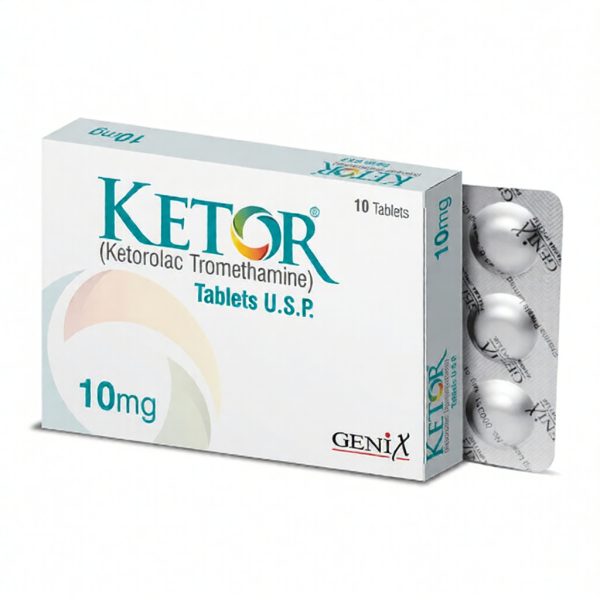
Adults: the recommended initial dose of Ketorolac is 10 mg, followed by 10-30 mg every 4 to 6 hours as required. In the initial postoperative period, Ketorolac may be given as often as every 2 hours if needed. The lowest effective dose should be given. A total daily dose of 90 mg for non-elderly and 60 mg for the elderly, renally-impaired patients and patients less than 50 kg should not be exceeded. Children: Safety and efficacy in children have not been established. Therefore, Ketorolac is contraindicated for use in children under 16 years of age .
Side Effects
Gastrointestinal tract: abdominal discomfort, constipation, diarrhoea, dyspepsia, eructation, flatulence, fullness, gastritis, gastrointestinal bleeding, gastrointestinal pain, nausea, pancreatitis, peptic ulcer, perforation, stomatitis, vomiting. Central nervous/ musculoskeletal systems: abnormal dreams, abnormal taste and vision, abnormal thinking, aseptic meningitis, convulsions, depression, dizziness, drowsiness, dry mouth, euphoria, excessive thirst, functional disorders, hallucinations, headache, hearing loss, hyperkinesia, inability to concentrate, insomnia, myalgia, nervousness, paraesthesia, stimulation, sweating. Tinnitus, vertigo. Urinary tract and kidneys: acute renal failure, flank pain . Skin: exfoliative dermatitis, Lyell’s syndrome, maculopapular rash, pruritus, Stevens-Johnson syndrome, urticaria. Hypersensitivity reactions: anaphylaxis, bronchospasm, flushing and rash, hypotension, laryngeal edema. Such reactions may occur in patients with or without known sensitivity to Ketor or other NSAIDs. Bleeding: epistaxis, hematomata, postoperative wound haemorrhage .
Drug Interactions
Morphine sulphate, pethidine hydrochloride, promethazine hydrochloride or hydroxyzine hydrochloride , Anticoagulants , lithium , NSAIDS , methotrexate , probenecid , aspirin , diuretics , mifepristone , cyclosporin , tacrolimus .