Express delivery and free returns within 28 days

Untitled design

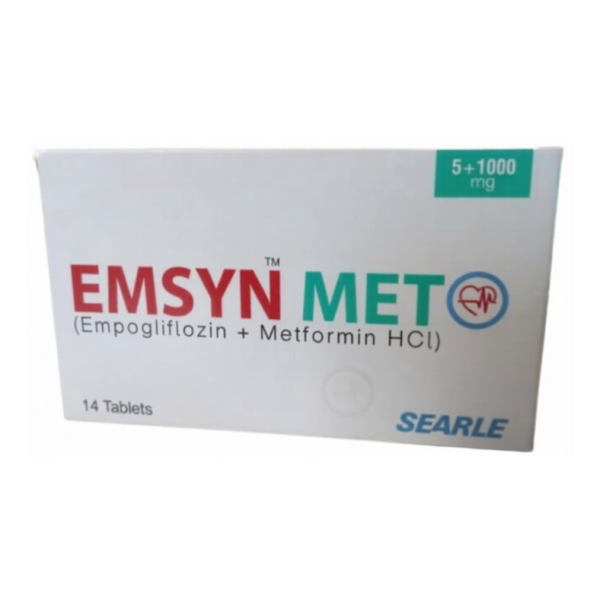
Emsyn Met 5/1000mg 14 Tablets

18.57

Quantity:
SKU: MD-6565 Categories: , ,

Description

Metformin 1000mg primarily works by inhibiting glucose production in the liver, a process mediated by adenosine monophosphate-activated protein kinase (AMPK). It enhances insulin sensitivity in peripheral tissues, allowing for better glucose uptake. On the other hand, Empagliflozin 5mg, a sodium-glucose cotransporter 2 (SGLT2) inhibitor, acts by blocking glucose reabsorption in the kidneys, leading to increased glucose excretion in urine. This dual mechanism results in reduced blood glucose levels, making it effective in managing type 2 diabetes.

Ingredients

Metformin, Empagliflozin

Drug Class

SGLT2 inhibitor, Biguanide.

Dosage Form

Tablet

Uses

The following are the uses of Metformin 1000mg, Empagliflozin 5mg Tablet:

  • Used for managing type 2 diabetes by lowering blood sugar levels.
  • Used to improve insulin sensitivity, allowing better sugar absorption.
  • Used to reduce the risk of cardiovascular events in diabetic patients.
  • Used to promote weight loss and improve body’s response to insulin.
  • Used to decrease blood sugar and A1C levels, enhancing glycemic control.
  • Used to lower the risk of diabetic kidney disease progression.
  • Used to improve overall glucose metabolism and cardiovascular health.
  • Used to treat insulin resistance, aiding in diabetes management.

    Dosage

    Tailoring Treatment for Optimal Health, Prescribed Medication Dosage is:

    • For Empagliflozin 5mg- Adults with type 2 diabetes mellitus to improve glycemic control in combination with insulin or sulfonylurea derivatives, doses of 10 mg once daily should be used.
    • For Empagliflozin 5mg- Adults with type 2 diabetes mellitus to improve glycemic control in combination with metformin hydrochloride or a thiazolidinedione, or both, doses of 5 mg once daily should be used.
    • For Metformin Hydrochloride 1000mg- Usual starting dose is 500 mg per day, given with meals, either as two 500-mg tablets per day or one 1000-mg tablet per day.
    • For Metformin Hydrochloride 1000mg- Dose may be increased after 1 week to 1000 mg per day, given as two 500-mg tablets per day, or as one 1000-mg tablet per day.
    • In some patients, particularly those with edema or heart failure, the dose should not be increased beyond this level.

      In case of Overdose

      In the case of an overdose of Metformin 1000mg and Empagliflozin 5mg tablets, individuals may experience symptoms such as nausea, vomiting, diarrhea, and abdominal pain. Hypoglycemia is a potential risk with Empagliflozin, while lactic acidosis can occur with Metformin overdose. It is important to seek medical advice promptly, as treatment may involve supportive care, monitoring of vital signs, and managing any complications that arise from the overdose.

      Missed Dose

      In the case of a missed dose of Metformin 1000mg, it is recommended to take the missed dose as soon as you remember, but if it is close to the time for your next dose, skip the missed dose and continue with your regular dosing schedule. Do not take a double dose to make up for the missed one. For Empagliflozin 5mg, if you miss a dose, take it as soon as you remember, unless it is close to the time for your next dose. In this case, skip the missed dose and continue with your regular dosing schedule. It is important not to double the dose to catch up.

      How To Use

      To take Metformin 1000mg and Empagliflozin 5mg tablets, swallow one tablet with a full glass of water, preferably during a meal or as directed by your healthcare provider, once daily at the same time each day.

      When Not to Use

      Following are the conditions/situations when Metformin 1000mg and Empagliflozin 5mg Tablet should not be used:

      • Should not be used in patients with a known allergy or hypersensitivity to Metformin, Empagliflozin, or any other components of the medication.
      • Contraindicated in patients with severe kidney disease or those receiving dialysis.
      • Not suitable for individuals with diabetic ketoacidosis (a serious complication of diabetes).
      • Should not be used in patients with a history of a severe allergic reaction (angioedema) to other SGLT2 inhibitors.
      • Should not be administered to patients with a history of a serious allergic reaction to Metformin, such as lactic acidosis.
      • Not recommended for individuals with a recent history of heart attack, stroke, or severe blood circulation issues.
      • Contraindicated in patients with a severe infection or undergoing surgery, as it can increase the risk of tissue oxygen deprivation.

        Side Effects

        The side effects of Metformin 1000mg and Empagliflozin 5mg Tablet may include:

        • Nausea and vomiting
        • Diarrhea or stomach pain
        • Weakness or fatigue
        • Metallic taste in the mouth
        • Increased urination
        • Genital yeast infections
        • Dizziness
        • Low blood sugar levels

          Precautions & Warnings

          Following are the precautions and warnings for Metformin 1000mg, Empagliflozin 5mg Tablet:

          • This medication should be used with caution in patients with kidney or liver disease, as it may require dosage adjustments or close monitoring.
          • Patients with a history of diabetic ketoacidosis should not use this medication, and it should be discontinued if ketoacidosis is suspected.
          • May cause dehydration and low blood pressure; monitor for symptoms and adjust treatment accordingly.
          • Elderly patients may be more susceptible to the effects and side effects of this medication, particularly on kidney function.
          • Exercise caution when consuming alcohol while taking this medication, as it may increase the risk of low blood sugar and other side effects.
          • Inform your doctor if you have any allergies or are taking other medications to avoid potential interactions.
          • Discontinue use and seek medical attention if you experience signs of lactic acidosis, such as unusual muscle pain, trouble breathing, or stomach discomfort.
          • Patients with a history of diabetic foot or other foot problems should be monitored for worsening symptoms.

            Drug Interactions

            Following are the drug interactions for Metformin 1000mg and Empagliflozin 5mg Tablet:

            • Alcohol may increase the risk of lactic acidosis when combined with Metformin.
            • Diuretics, especially loop diuretics, can enhance the blood glucose-lowering effect of Empagliflozin.
            • Insulin or other anti-diabetic medications may require dose adjustments when used with Metformin and Empagliflozin.
            • Nonsteroidal anti-inflammatory drugs (NSAIDs) can reduce the effectiveness of Empagliflozin in lowering blood pressure.
            • Drugs that affect kidney function may alter the elimination of Empagliflozin, leading to increased plasma levels.
            • Corticosteroids may increase blood glucose levels, requiring careful monitoring and dose adjustments of Metformin and Empagliflozin.
            • Certain contrast agents used in medical imaging procedures may temporarily impair kidney function, affecting Empagliflozin elimination.

              Food Interactions

              Following are the food interactions for Metformin 1000mg and Empagliflozin 5mg Tablet:

              • Alcohol consumption should be limited or avoided as it can increase the risk of lactic acidosis, a rare but serious side effect of Metformin.
              • Avoid excessive alcohol intake while taking Empagliflozin as it can cause dehydration and affect blood sugar levels.
              • Metformin may cause a decrease in vitamin B12 absorption, so consider taking supplements or consuming foods rich in vitamin B12.
              • Grapefruit and grapefruit juice should be consumed with caution as they may affect the metabolism of Empagliflozin, leading to increased plasma concentrations.
              • High-potassium foods like bananas, oranges, and spinach should be monitored as Empagliflozin can increase potassium levels.
              • Avoid high-sugar foods and beverages, as they can counteract the blood sugar-lowering effects of both medications.
              • There is no specific food interaction with Metformin, but a healthy and balanced diet is recommended for optimal blood sugar control.
              • Empagliflozin may cause mild urinary tract infections, so ensure adequate fluid intake and consider reducing bladder irritants like caffeine and spicy foods.

                Storage/Disposal

                The proper storage and disposal of Metformin 1000mg and Empagliflozin 5mg tablets are essential for maintaining their effectiveness and safety. Store these medications in a cool, dry place, away from sunlight and moisture, ideally at room temperature. Keep the tablets in their original containers, tightly sealed, to prevent contamination. Avoid exposing them to extreme temperatures by storing them away from heat sources like stoves or radiators. Regularly check the expiration dates on the packaging, and dispose of any expired or unused tablets promptly. When disposing of these medications, do not flush them down the toilet or drain; instead, follow local guidelines or consult a pharmacist for appropriate disposal methods. Keep all medications securely stored and out of children’s reach to prevent accidental consumption.

                Quick Tips, if any

                Following are the quick tips for Metformin 1000mg and Empagliflozin 5mg Tablet:

                • Take your medication as directed by your doctor; consistency is key.
                • Ensure you swallow the tablets whole; do not crush or chew.
                • Pair your medication with a full glass of water for easier swallowing.
                • Maintain a regular schedule for taking your tablets to maximize effectiveness.
                • Consider taking your dose with food to minimize stomach-related side effects.
                • Never share your medication with others, even if they have similar symptoms.
                • Store your tablets in a cool, dry place, away from direct sunlight.