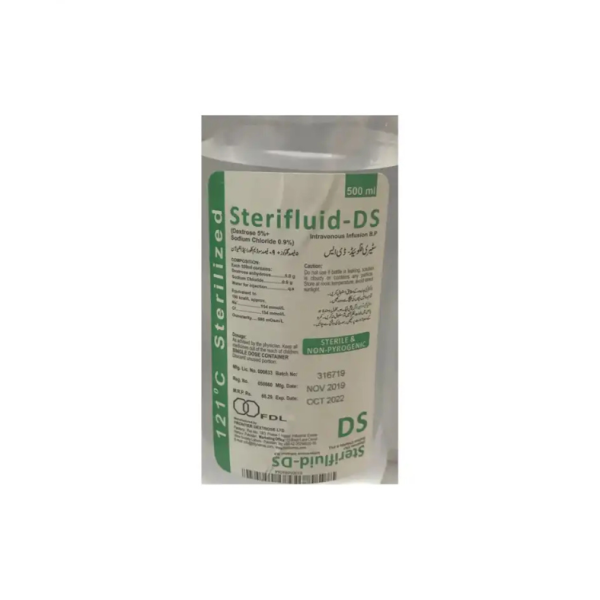
Usage And Safety
Dosage
The dose is dependent upon the age, weight and clinical condition of the patient. The infusion rate should be adjusted to provide 300-500 ml/hour (about 75-125 drops/minute) for adults and 50-100 ml/hour (about 12-25 drops/minute) for children. In neonates and pre-term babies’ infusion of more than 100 ml/hour should be avoided. OR As directed by your physician .
Side Effects
Fluid overload; Water intoxication may occur if infused rapidly or in large amounts; Congestive heart failure; Hyperglycemia.
Drug Interactions
Ask your pharmacist or physician for any drug interactions.
Indication
Hypovolemic states including dehydration.Recommended as an initial solution for rehydration, for the supply of water and electrolytes in neonates and infants; Used to supply or replenish water and electrolytes before, during and after surgery particularly in neonates and infants; Indicated for the supply or replenishment of water and electrolytes in cases of possible potassium retention such as anuria, oliguria, hyperkalemia, and increased BUN, particularly in neonates and infants.
When not to Use
Do not use when: Congestive heart failure; Renal failure; Elevated blood glucose concentration.