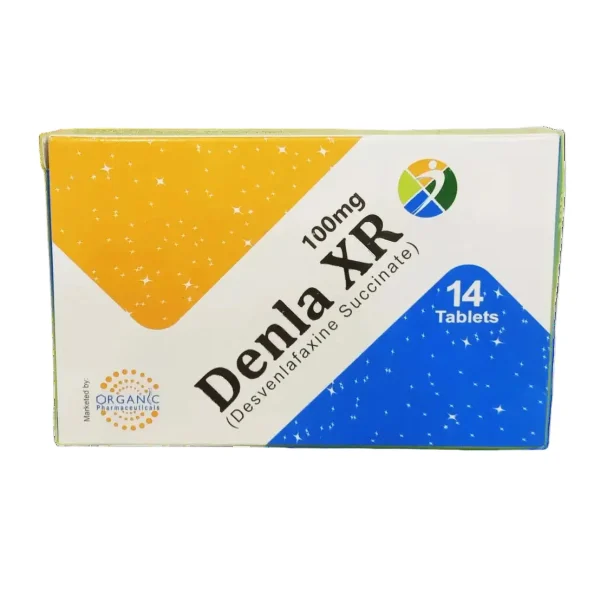
₨47.14
Yes
Desvenlafaxine Succinate
Depression
Non-clinical studies have shown that desvenlafaxine succinate is a potent and selective serotonin and norepinephrine reuptake inhibitor (SNRI). The clinical efficacy of desvenlafaxine succinate is thought to be related to the potentiation of these neurotransmitters in the central nervous system.
The recommended dose is 50 mg once daily, with or without food. Your doctor may increase the dose slowly at an interval of not less than 7 days, up to a maximum daily dose of 100 mg. Children: Safety and effectiveness in children under 18 years of age has not been established. OR As directed by your physician.
Very common : Nausea, Dry mouth, Dizziness, Trouble sleeping, Sweating, Headache, Drowsiness ; Common : Heart pounding, Heart racing, Ringing in the ears, Vertigo, Dilated pupils, Vision blurred, Vomiting, Diarrhea, Weakness, Chills, Feeling Jittery, Irritability, Weight Decreased, Weight Increased, Blood Pressure Increased, Musculoskeletal Stiffness, Shaking, Disturbance in Attention, Tingling sensations, Taste changes, No orgasms, Anxiety, Nervousness, Interest in sex decreased, Abnormal dreams, Ejaculation delayed (in men), Erectile dysfunction (in men), Yawning, Rash, Hot flush, Decreased appetite, Constipation, Tiredness, Drug withdrawal syndrome, Liver function tests abnormal .
Central Nervous System (CNS)-Active Agents , Monoamine Oxidase Inhibitors (MAOI) , Serotonergic Drugs , Drugs that Interfere with Hemostasis (e.g., NSAIDs, Aspirin, and Warfarin) , Inhibitors of CYP3A4 (ketoconazole) , Inhibitors of other CYP enzymes .
It is indicated for the treatment of major depressive disorder (MDD).
Hypersensitivity to desvenlafaxine succinate, venlafaxine hydrochloride or to any excipients in the list.
Particularly in the first few weeks or when doses are adjusted, a small number of patients taking drugs of this type may feel worse instead of better. They may experience new or worsened feelings of aggression, agitation, hostility, anxiety, impulsivity, or thoughts about suicide, self-harm or harm to others. Suicidal thoughts and actions can occur in any age group but may be more likely in patients 18 to 24 years old . Should this happen to you or those in your care, consult your doctor immediately .
Your blood pressure can rise during treatment with desvenlafaxine especially if you are taking high doses. It is therefore advisable to check your blood pressure at regular intervals .
Because high cholesterol levels can occur under long-term treatment with desvenlafaxine, cholesterol examinations should be taken into consideration.
Withdrawal symptoms can occur after treatment with desvenlafaxine depending on the dose which has been taken and the duration of treatment, especially if the treatment is ended suddenly. It is recommended to end treatment by reducing the dose in steps.
Always consult your physician before using any medicine.
Store this medicine at room temperature, away from direct light and heat.