Usage And Safety
Dosage
Adults: An initial dose of 2.5 mg three times daily. Your doctor may decide to increase to the maximum dose of 5 mg four times daily. Elderly: An initial dose is 2.5 mg twice daily. Your doctor may decide to increase this to 5 mg twice daily. Children (over 5 years): An initial dose is 2.5 mg twice daily. Your doctor may decide to increase this to 5mg two or three times daily. OR As directed by your physician.
Side Effects
Dizziness, headache, somnolence (feeling drowsy or sleepy) , decreased tear production/dry eyes, facial flushing (especially in children), constipation, nausea, dry mouth, dry skin/decreased sweating, urinary retention indigestion, diarrhoea, being sick (vomiting), confusion.
Drug Interactions
Atropine, compounds related to atropine, Prochlorperazine, chlorpromazine or other phenothiazines, Clozapine or other antipsychotics, Haloperidol, beneridol or other butyrophenones, amitriptyline, imipramine, dosulepin or other tricyclic antidepressants, Amantadine, Levodopa, biperiden, Digoxin, Dipyridamole, Ketoconazole, itraconazole or fluconazole, Erythromycin or other macrolide antibiotics, Quinidine, Antihistamines, Metoclopramide or domperidone, Cholinesterase inhibitors.
Indication
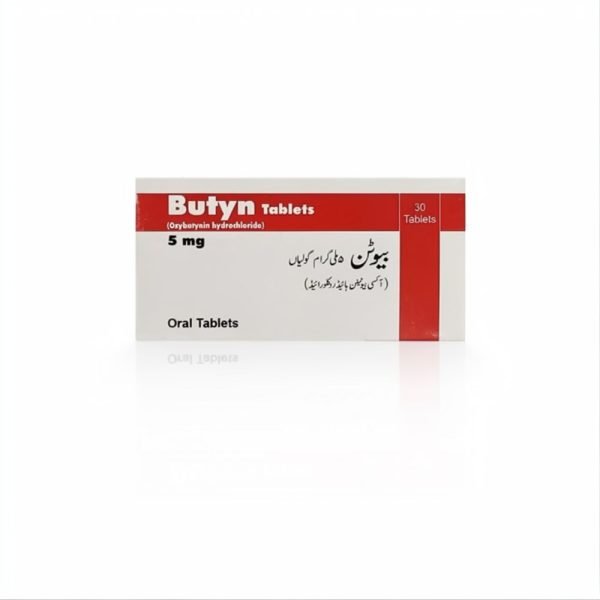
It is used to treat frequent and severe urinary urgency or Loss of control in passing urine (urge incontinence).
When not to Use
Do not take Oxybutynin and tell your doctor if: – You are allergic to Oxybutynin hydrochloride or any of the other ingredients . – You have a rare condition called “Myasthenia gravis” that makes the muscles in the body become weak and tire easily. – You have increased pressure in the eye (glaucoma). – Your gut (stomach or intestine) is blocked, perforated or not working properly – You have a severe form of a condition known as “ulcerative colitis (inflammatory disease of the large intestine)”.
Warnings
Warning 1
Oxybutynin hydrochloride may aggravate tachycardia (and thus hyperthyroidism, congestive heart failure, cardiac arrhythmia, coronary heart disease, hypertension), cognitive disorders and symptoms of prostatic hypertrophy.
Warning 2
Since oxybutynin can cause narrow-angle glaucoma, patients should be advised to contact a physician immediately if they are aware of a sudden loss of visual acuity or ocular pain.
Warning 3
When oxybutynin is used in high environmental temperatures, this can cause heat prostration due to decreased sweating.