Express delivery and free returns within 28 days

Untitled design

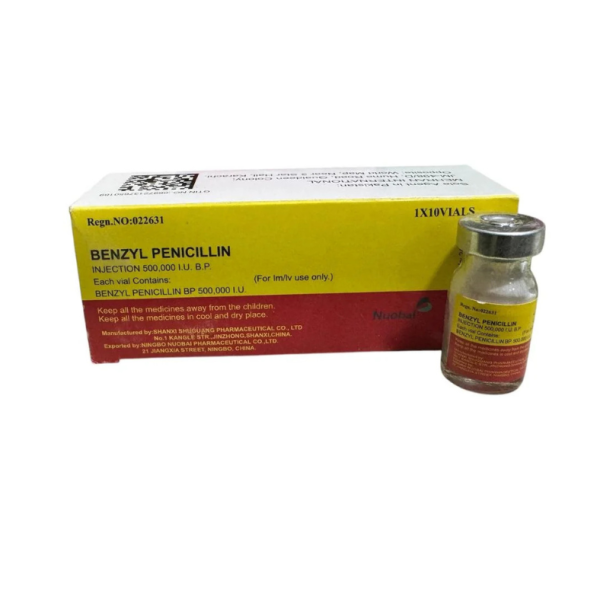
Benzyl Penicillin Injection 5 Lac 1 Vial

50.00

Quantity:

Description

Description

Benzyl Penicillin Injection, a member of the penicillin family, exerts its antibacterial effect through a specific mechanism of action. It primarily acts by inhibiting the synthesis of bacterial cell walls during active replication. Penicillins, including Benzyl Penicillin, bind to and inactivate enzymes called transpeptidases, which are crucial for cross-linking peptidoglycan strands in the bacterial cell wall. By interfering with these enzymes, the drug prevents the formation of a strong and stable cell wall, leading to cell lysis and the death of susceptible bacteria. This selective action makes Benzyl Penicillin particularly effective against a range of Gram-positive and some Gram-negative bacteria, disrupting their growth and proliferation.

Ingredients

Benzyl Penicillin

Drug Class

Penicillin Antibiotic

Dosage Form

injection

Uses

The following are the uses of Benzyl Penicillin Injection:

  • Used for treating bacterial infections such as pneumonia, meningitis, and syphilis.
  • Used for skin and soft tissue infections, preventing the spread of infection.
  • Used for treating respiratory tract infections caused by penicillin-sensitive bacteria.
  • Used for combating infections in the mouth, throat, and tonsils.
  • Used for surgical procedures to prevent post-operative infections.
  • Used for treating severe infections in children, providing rapid relief.
  • Used for specific bacterial strains, ensuring targeted treatment.

    In case of Overdose

    In the case of an overdose of Benzyl Penicillin Injection, several adverse effects may occur. These can include severe allergic reactions, such as anaphylaxis, characterized by difficulty breathing, hives, and swelling. Gastrointestinal symptoms like nausea, vomiting, and diarrhea are also common. Additionally, patients may experience neurological issues, ranging from confusion and seizures to more severe complications. Prompt medical intervention is necessary to manage these symptoms and prevent potential long-term consequences.

    Missed Dose

    In the case of a missed dose of Benzyl Penicillin Injection, it is crucial to act promptly. If you realize you’ve missed a dose, administer it as soon as possible, but avoid doubling the dose to catch up. If the timing is close to the next scheduled dose, skip the missed dose and resume your regular dosing schedule. It is essential to maintain a consistent medication routine, so try to take your doses at the same time each day. Always consult your healthcare provider if you have concerns or questions about missed doses.

    How To Use

    To administer Benzyl Penicillin Injection, draw the prescribed dose into a syringe, ensuring the needle is securely attached, and inject it intramuscularly or intravenously as directed by your healthcare professional, following the recommended dosage and administration guidelines provided.

    When Not to Use

    Following are the conditions/situations when Benzyl Penicillin Injection should not be administered:

    • Must not be used in patients with a history of allergic reactions to penicillin or any other beta-lactam antibiotics.
    • Contraindicated in individuals with a known allergy to any of the injection components, such as lidocaine or procaine.
    • Not suitable for patients with a history of severe gastrointestinal disease, especially infectious colitis.
    • Should be avoided in patients with a history of epileptic seizures or other neurological disorders.
    • Not recommended for individuals with kidney disease or significantly impaired kidney function.
    • Should not be used in patients with a history of severe asthma, especially those with a history of penicillin-induced asthma.
    • Contraindicated during breastfeeding as penicillin can pass into breast milk and may cause adverse effects in nursing infants.

      Side Effects

      The side effects of Benzyl Penicillin Injection may include:

      • Allergic reactions such as skin rash, itching, or hives.
      • Nausea and vomiting.
      • Diarrhea.
      • Fever.
      • Pain and inflammation at the injection site.
      • Neurological symptoms like seizures (rarely).
      • Kidney issues, leading to decreased urine output.
      • Superinfection (excessive growth of bacteria or fungi).

        Precautions & Warnings

        Following are the precautions and warnings:

        • Benzyl Penicillin Injection should not be administered to individuals with a history of allergic reactions to penicillin or any other beta-lactam antibiotics. Severe allergic reactions can be life-threatening.
        • Patients with a history of asthma or allergies are at a higher risk of experiencing adverse reactions and should be closely monitored.
        • Prolonged use or high doses may lead to the overgrowth of non-susceptible organisms, including fungi. Regularly assess patients for signs of superinfection.
        • Caution is advised in patients with impaired kidney function as dosage adjustments may be necessary to prevent toxicity.
        • It should be used with caution in individuals with a history of gastrointestinal diseases, especially colitis, as it may exacerbate these conditions.
        • Benzyl Penicillin may interact with other medications such as probenecid and methotrexate; consult a healthcare professional before combining treatments.
        • This medication should be used during pregnancy only if the potential benefit justifies the potential risk to the fetus.
        • Breastfeeding women should exercise caution as penicillin is excreted in breast milk and may cause adverse effects in nursing infants.

          Drug Interactions

          Following are the drug interactions for Benzyl Penicillin Injection:

          • Probenecid slows the excretion of penicillin, increasing its blood levels and risk of side effects.
          • Tetracyclines may reduce the effectiveness of penicillin when taken together.
          • Allopurinol can increase the risk of skin reactions when used with penicillin.
          • Anticoagulants like warfarin may have their effect enhanced, requiring close monitoring.
          • Oral contraceptives can reduce the absorption of penicillin, potentially decreasing its effectiveness.
          • Methotrexate toxicity may be increased due to reduced renal clearance when combined with penicillin.
          • Live vaccines may not work as well during and shortly after penicillin treatment.

            Food Interactions

            Following are the food interactions to consider with Benzyl Penicillin Injection:

            • Avoid excessive alcohol consumption during the treatment period, as alcohol can reduce the effectiveness of penicillin and increase the risk of side effects.
            • Grapefruit and grapefruit juice should be consumed with caution as they can interfere with the absorption of some medications, including penicillins, potentially reducing their effectiveness.
            • Avoid consuming large amounts of highly acidic foods, like citrus fruits or tomatoes, as they may irritate the injection site and cause discomfort.
            • Dairy products such as milk, cheese, and yogurt may reduce the absorption of Benzyl Penicillin when taken together. It is best to separate the medication and dairy intake by a few hours.
            • Avoid high-fat meals before or after the injection, as they may slow down the absorption of the medication.
            • Ensure adequate hydration before and after the injection to aid in the distribution of the medication throughout the body.
            • Certain vitamin and mineral supplements, especially those containing calcium, iron, or zinc, may interact with Benzyl Penicillin. It is advisable to consult a healthcare professional for guidance on supplement timing.

              Storage/Disposal

              Benzyl Penicillin Injection should be stored in a controlled environment, preferably in a cool and dry place, maintaining a temperature between 2°C and 8°C (36°F and 46°F). Protect the injection from direct sunlight and moisture to ensure its stability. Always keep the medication in its original packaging, tightly sealed, to maintain its integrity and prevent contamination. Do not freeze the injection as it may affect its potency. Dispose of any unused or expired medication responsibly; do not throw it into the trash or pour it down the drain. Contact your healthcare provider or pharmacist for guidance on proper disposal methods to minimize environmental impact. Keep the injection out of children’s reach to prevent accidental exposure.