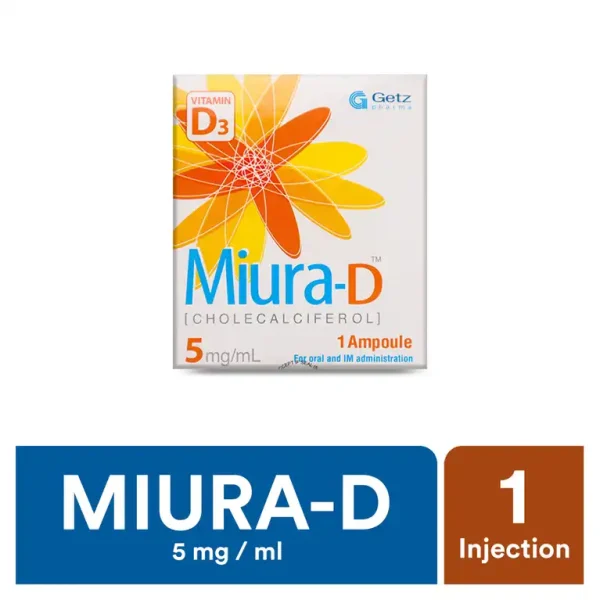
Usage And Safety
Dosage
a. Calcium Deficient Rickets: For children > 12months of age: 200,000 IU (1 ampoule) once per month repeated every 3 months until healing is established.b. Osteomalacia: Adults: 100,000 IU (1/2 ampoule) once a week for 6-12 months.c. Vitamin D Deficiency: i. Children > 12 months of age: 100,000 IU (1/2 ampoule) once a month for 3 months, followed by 400-1000 IU/day as maintenance;ii. Adults: 200,000 IU (1 ampoule) once a month for 2-3 months, followed by 100,000 IU (½ ampoule) once a month as maintenance.It is important to obtain calcium, phosphorus, and Alkaline Phosphatase levels before and 1 month after initiating therapy.
Side Effects
Acute symptoms : Arrhythmias, nausea, vomiting, psychic symptoms, and impaired consciousnesses.Chronic symptoms : Polyuria, polydipsia, weight loss, kidney stone formation, nephrocalcinosis, extraosseous calcifications
Drug Interactions
Thiazide diuretics , Phenytoin or barbiturates , glucocorticoids
Indication
Prevention of Vitamin D Deficiency due to malabsorption, drugs, certain chronic diseases, disorders of metabolism or other causes. Treatment of vitamin D deficiency states. These include the following: Rickets: In children , Osteomalacia: In adults.
When not to Use
It may not be used in the following conditions:Hypersensitivity to Cholecalciferol or any of the ingredients of the drug.Hypercalcemia and/or hypercalciuria.It should not be administered to patients : With a tendency towards the formation of kidney stones containing calcium ; With pseudohypoparathyroidism.