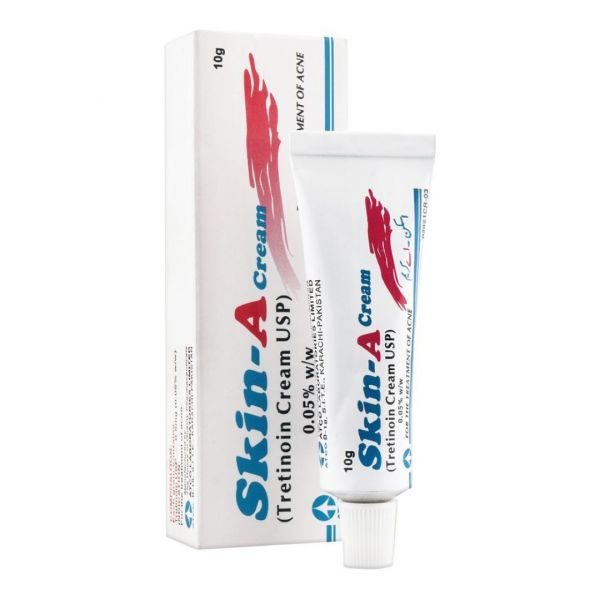
Tretinoin speeds up the process of skin cell turnover. It helps to shed old, dead skin cells and encourages the growth of new, healthy skin cells. This helps to prevent clogged pores, which can lead to acne. It reduces the production of keratin, a protein that can contribute to clogged pores and the formation of acne. By decreasing keratin buildup, tretinoin helps to keep pores clear. Tretinoin has anti-inflammatory properties that help reduce redness and swelling associated with acne. It promotes the remodeling of skin texture and reduces the appearance of fine lines, wrinkles, and dark spots by stimulating collagen production.
Ingredients
Tretinoin
Dosage Form
Uses
Tretinoin is indicated in conditions like Acne Vulgaris and Promyelocytic leukemia
Dosage
Tretinoin dosage recommendations are:
- Follow the instructions of physician.
In case of Overdose
Overuse may lead to excessive skin irritation, redness, or peeling. Discontinue use and consult a healthcare provider if irritation occurs.
Missed Dose
Apply as soon as you remember. If it’s almost time for your next dose, skip the missed dose and continue with your regular schedule.
How To Use
Apply a thin layer to the affected area once daily before bedtime. Avoid contact with eyes, lips, and mucous membranes. Wash hands after application.
When Not to Use
Do not use tretinoin in the following situations:
- If you have hypersensitivity to tretinoin
- If you have certain skin conditions such as eczema or severe sunburn
Side Effects
Unraveling the side effects lurking behind this product are the following:
• Irritation
• Erythema
• Warmth feeling
Precautions & Warnings
Should be used with caution in patients with any illness or any allergy
Drug Interactions
Drug interactions with Tretinoin include:
- Topical products (e.g., salicylic acid, benzoyl peroxide) (may cause excessive dryness or irritation when used together)
- Other retinoids (e.g., isotretinoin) (risk of additive effects or increased toxicity)
Storage/Disposal
Store at room temperature, away from heat and light. Dispose of the tube responsibly once finished, following local waste disposal instructions.