No
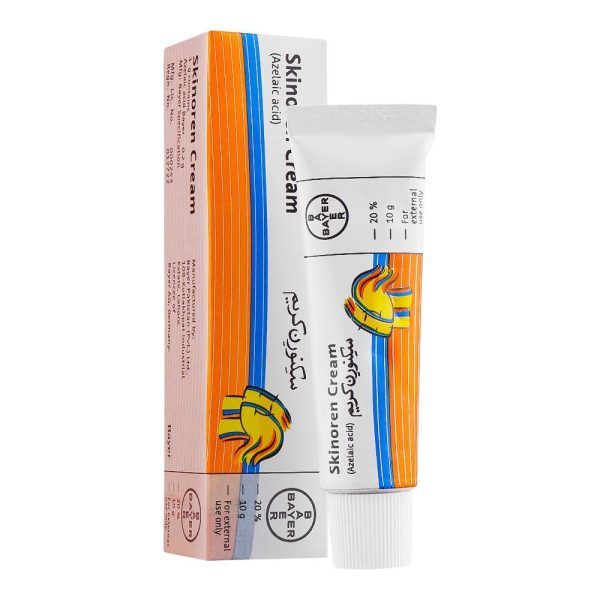
Azelaic Acid
Acne
It attacks the bacteria, Propionibacterium acnes, that play an essential part in causing acne.It also reduces growth of the keratin surface cells that block the pores of the skin to cause blackheads and whiteheads.
Azelaic Acid
Very common (may affect more than 1 in 10 people): Burning, redness, itching (pruritus) at the application site ; Common (may affect up to 1 in 10 people ): Pain, rash, irritation, skin discolouration, dry or flaky skin at the application site ; Uncommon (may affect up to 1 in 100 people): Feeling of tingling or numbness (paraesthesia), skin reaction due to an external agent (contact dermatitis), scaling, warmth, skin whitening, discomfort or swelling at the application site, acne, red, itchy and scaly skin (seborrhoea) .
Tell your doctor or pharmacist if you are using or have recently used or might use any other medicines .
It is used to treat all stages of common acne (acne vulgaris).
Do not use if: • You are allergic or hypersensitive to azelaic acid or to any of the other ingredients .
It is for external use on the skin only. Take care to avoid contact with the eyes, mouth and other mucous membranes or open wounds. In the event of an accidental contact, wash the eyes, mouth and/or affected mucous membranes with large amounts of water. You should consult a doctor or pharmacist if an eye irritation persists.
It is for topical use only. This means that it is put on the skin.
You should not allow Azelaic Acid to come into contact with your eyes. If it does, bathe your eyes immediately with large amounts of cool water .
It contains a very small amount of benzoic acid. Benzoic acid is mildly irritating to the skin, eyes and mucous membrane .
Always consult your physician before using any medicine.
Store this medicine at room temperature, away from direct light and heat.